.png)
For years, universities have fallen into the "program trap"—treating mentorship as a specialized initiative for small cohorts. But as student success becomes an increasingly urgent strategic priority, leaders are rethinking mentorship as a universal layer of infrastructure, as essential to the student journey as Wi-Fi or academic advising.
In our recent webinar, "Mentorship for All," we sat down with Dr. Ron Darbeau, Chancellor of Penn State Altoona and Vice President for Commonwealth Campuses, and Jordan DiPentima, Executive Director of Mentoring Programs at Florida Atlantic University (FAU), to discuss how they moved away from siloed initiatives to build a system-wide culture of connection.
The Executive Mandate: Why "Pilot-itis" is No Longer Enough
Many institutions hesitate to scale, preferring small pilots. However, Dr. Darbeau argues that if mentorship works for a subgroup, there is a moral and fiscal imperative to offer it to everyone. At Penn State Altoona, he bypassed the traditional pilot phase to launch mentorship for the entire campus on day one.
"If it’s working for one subgroup, I think there is a moral perspective to make sure that as many students as possible had the ability to experience the benefit of mentorship. We were always meant to be gateways, not gatekeepers." — Dr. Ron Darbeau 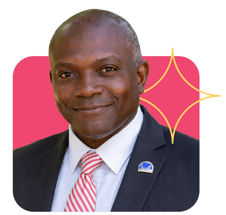
The Business Case for Connection
Beyond the moral calling, there is a clear financial driver: retention. Dr. Darbeau frames this through the lens of "re-recruitment."
"If you increase your retention numbers by 20, that’s a salary and fringe of a faculty or staff member. If you increase it by 10, that’s a travel budget for an entire department. There is a financial imperative in the work."
— Dr. Ron Darbeau
Scaling Through the Silos: The FAU Evolution
At Florida Atlantic University, Jordan DiPentima has led a five-year evolution from fragmented "pockets of mentorship" to a dedicated university office. Her journey highlights the importance of institutional visibility and the support of a "S.W.A.T." team (Strategic Workgroup Ascending to the Top).
When a new president arrived with a vision for "Presidential Mentorship," the groundwork laid by DiPentima allowed the university to scale rapidly.
 "Mentorship doesn’t end for a student. It continues all the way from freshman year into when they are an alumni, and they continue to give back through a never-ending cycle." — Jordan DiPentima
The Dangers of the Spreadsheet Ceiling
One of the biggest hurdles to universal scale is the administrative burden. DiPentima noted that trying to manage these connections manually is a recipe for failure.
"The only reason we pitched that we would be able to do this at scale was because of the partnership with Mentor Collective. I think the whole program would be lost without the scaling capability." — Jordan DiPentima
The "Umbrella" and the "Pillar": A Dual Approach
Dr. Darbeau describes the universal mentorship model as both an umbrella—bringing all existing programs under one common language—and a pillar—upholding the university’s mission.
Designing for Every Life Stage
- First-Year Students: Focus on belonging and navigating campus life.
- Sophomores: Often the "forgotten population," receiving intentional interventions to prevent "stop-outs."
- Juniors/Seniors: Transitioning to pre-professional mentorship with alumni and industry leaders.
Jordan DiPentima emphasized that this evolution is critical for long-term career readiness: "Our freshmen would go through a year of mentorship and then get a 'thank you' survey. That’s just not how real life works. We’ve designed this for the evolution of the student."
Sustainability: Planting Seeds for the Future
To ensure mentorship survives leadership transitions, it must be deeply embedded in the budget and the community brand. At FAU, mentorship is now becoming a "hometown brand," connecting local business owners to students.
Dr. Darbeau concludes with a simple, powerful call to action for every faculty and staff member: Save One.
"If every single faculty member and staff member on this campus were able to save a single student, our budget deficit disappears. It is the work of every single person on the campus... to see talent earn its just reward." — Dr. Ron Darbeau
Is Your Campus Ready for Universal Mentorship?
The shift from a program to a pillar is what fundamentally changes student outcomes. Whether you take five years to build a mandate or go all-in from day one, you need the right infrastructure to ensure your team isn't buried in spreadsheets.
Learn more about how Mentor Collective provides the engine for universal mentorship.