
The spectrum of alumni engagement activities is broad. Not only does it encompass monetary giving but also participation in events and a willingness to be contacted by higher education institutions.
In a recent report by CASE, it was found that alumni engagement is growing but not keeping pace with alumni population growth. Specifically, and impactfully to institutions, philanthropic modes or monetary donations, declined from 3.8% in 2023 to 3.3% in 2025.
But, how do institutions continue this growth?

Core Engagement Types
Alumni engagement can be broken down into four core pillars:
- Volunteering
- Philanthropy
- Communication
- Experiential
Philanthropy is the most prominent and recognizable engagement type. However, CASE noted volunteer, communication, and experiential engagement have notably increased across the board and those who give were more likely to participate in more than one mode of engagement. On average 29.3% of those who volunteered also gave financially to the institution while 15.8% who engaged through communication gave.
Pathway to Engagement: Mentorship
 Alumni who engage in either experiential or volunteer engagement modes were more likely to donate monetarily to their alma mater. However, a common theme across CASE’s Alumni Engagement report is tracking this engagement and quantifying it for stakeholders on campus.
Volunteer engagement like mentorship offers an opportunity for institutions to not only engage alumni networks but connect alumni directly with today’s students.
Mentorship can provide:
- An increased connection with campus for alumni
- A sense of community, career readiness, and support for current students
- A view into data and insights on alumni engagement, persistence, and career readiness for the institution
Mentorship frameworks like this already exist within Greek life, individual colleges, and first-year experience programs. However, how do institutions scale these to impact the broader scope of students and track engagement effectively?
How Mentor Collective Can Help
Mentor Collective provides higher education institutions with the tools to track valuable mentorship metrics and to be the connecting point between students and alumni. This comes in two unique volunteer mentorship program designs: traditional structured mentorship and flash mentorship.
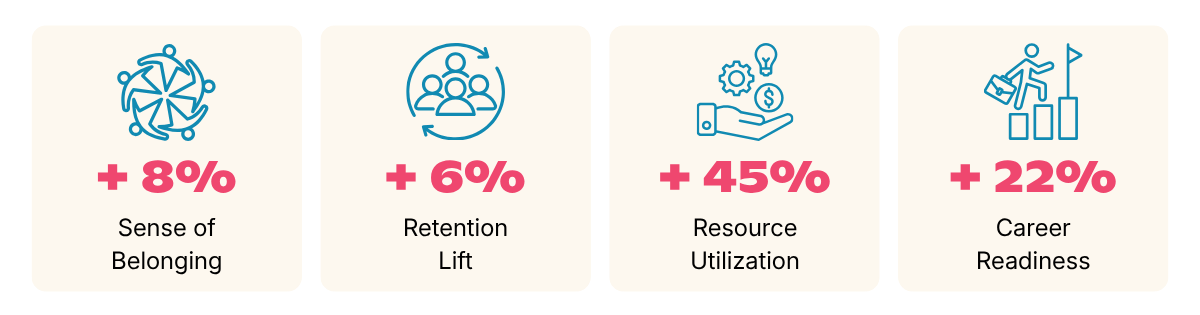
Traditional mentorship with the help of Mentor Collective can already make a major impact for campuses with some noticing up to an 8% increase in sense of belonging on campus and a 22% increase in feelings of career readiness among students.
While traditional structured mentorship was built with student-to-student matching in mind, flash mentorship was created to bridge the gap between alumni and current students.
Flash mentorship enables targeted connections to accelerate students’ career confidence and readiness while keeping alumni engaged through flexible, yet meaningful, interactions that don’t require a long term commitment.
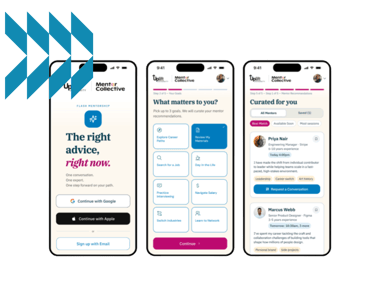 Through a flash mentorship program, students are connected with alumni based on career goals, major, and life experiences as well as the commitment level of the alumni mentor. This ensures students and alumni are in sync from the beginning to foster that sense of belonging and career readiness.
Data from the platform lets administrators gain unique visibility into the number of alumni connected with students, career needs of students, and usage vs. ROI of the program. In tandem with fundraising tools, it also provides alumni data for who is and how they’re engaging further through this volunteer opportunity to ultimately verify investment vs. alumni donations.
The future of alumni engagement isn’t about asking alumni for more. It’s about giving them more meaningful ways to contribute through volunteerism or experiential opportunities. Mentorship can be an important step towards increasing these opportunities and laying a foundation for deeper engagement across the growing alumni population.
Is your campus ready to scale alumni engagement outside of traditional modes?
Explore how Mentor Collective’s technology-driven solution transforms mentorship from a qualitative activity to a quantifiable and scalable initiative to drive alumni engagement.
